The Story of Rosalind Franklin: The Pioneer of Molecular Biology
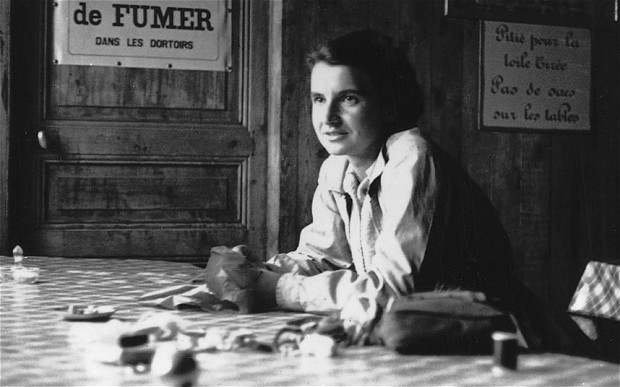
Franklin was born in 1920 in London, Britain, and showed exceptional academic abilities from a very young age. Ever since she was 15, she aspired to become a scientist. Her father, however, was strongly against higher education for women and wanted her to be a social worker. Ultimately, Rosalind managed to convince her father and enrolled at Newnham College, Cambridge, in 1938 and graduated in 1941.
She went on to work at the British Coal Utilization Research Association, where she conducted extensive studies of carbon and graphite microstructures. Based on her work here, she earned her doctorate in physical chemistry from Cambridge University in 1945. Further, she spent three years in Paris at the Laboratoire Central des Services Chimiques de L’Etat, where she became competent in X-ray diffraction techniques. She subsequently returned to England to work as a research associate in John Randall’s laboratory at King’s College, London.
She crossed paths with Maurice Wilkins in this lab, where they led separate research groups. Both of these research groups carried out separate projects that were concerned with DNA. Wilkins misunderstood her role in Randall’s lab and treated Franklin as though she were a technical assistant when, in reality, they were indeed peers. His mistake, though acknowledged, was never rectified. What’s more upsetting is the fact that this wasn’t an unusual circumstance given the plight of the women at the university back then. Only men were allowed in the dining rooms of the university, and Franklin’s colleagues went to men-only pubs after hours. But Franklin insisted that she’d continue on her DNA project despite these hindrances to her work.
Between 1951 and 1953, Rosalind Franklin was on the verge of solving the DNA structure but was beaten to publication by Francis Crick and James Watson. This was partially because of the friction between Wilkins and herself. Wilkins also leaked one of Franklin’s crystallographic portraits of DNA to Watson, which aided him in finding the solution, and their paper was published almost immediately, beating her to the chase.
Further, she moved on to J. D. Bernal’s lab at Birbeck College, where she undertook successful work on the Tobacco Mosaic Virus (TMV) and Polio Virus. She notably published seventeen research papers on the structure of TMV.
In 1956, Franklin fell ill with ovarian cancer, and she passed away less than two years later, in 1958, at the young age of 37. One could argue that this death was a clear case of historical bias and the gender gap in medical research, lesser priority given to women’s health and illnesses, and lack of available treatment options.
In 1962, James Watson, Francis Crick, and Maurice Wilkins were awarded a Nobel Prize for the double-helix model of DNA, four years after the death of Rosalind Franklin. Franklin, unfortunately, did not receive the Nobel Prize nor the recognition for her work in solving the DNA structure.
In 1982, Aaron Klug was awarded a Nobel Prize in Chemistry for his work on “combining X-ray crystallography and electron microscopy to study complex structures of DNA and proteins in organisms like viruses.” He had continued Rosalind’s work after her death to have won this prize. If only she were alive, she would have been awarded this Nobel Prize alongside Klug.
And thus, unfortunately, sexism in the former and her illness in the latter episode denied this fascinating scientist of her two Nobel Prizes and recognition. Rosalind Franklin was undoubtedly a scientist of the first rank, and she shall be remembered as one of the brilliant minds who helped shape modern molecular biology and helped in the further advancement of scientific research in almost all fields of biology and chemistry.
Written by Sanjana


Comments
Post a Comment